I Might Be the User Wall Street Is Afraid Of
Listen to this post: Head over to Substack to hear me read it aloud.
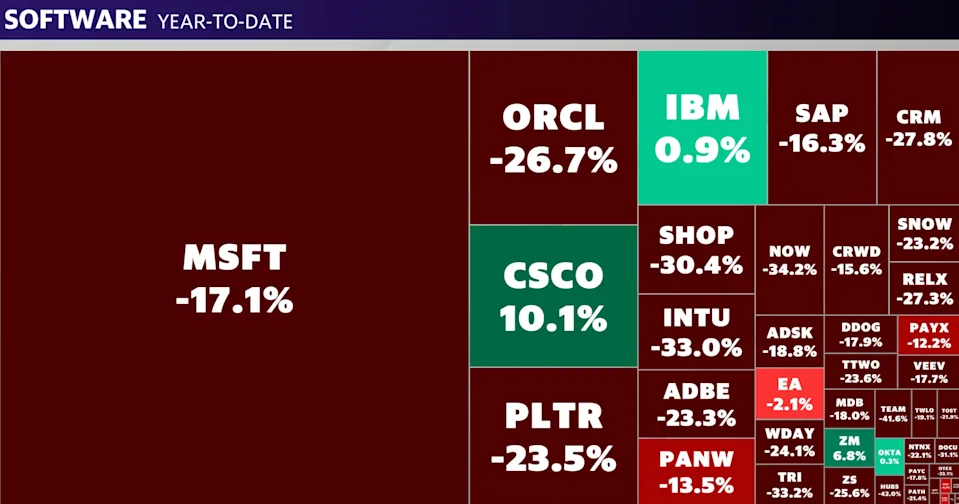
I might be the exact user Wall Street is worried about in the recent SaaS selloff.
The ironic silver lining?
If generative AI is pressuring software valuations, it’s also creating real efficiency gains for operators.
So instead of just watching the disruption…
you can benefit from it.
Fight fire with fire.
Recent routing in some SaaS stocks (and the broader fear around tools like $CRM, $INTU, etc.) seems to be anchored on one idea:
“AI will replace traditional SaaS workflows.”
And honestly… I’m living that shift right now.
I run an S-corp consulting business.
Historically, the “correct” stack would be:
QuickBooks Online, integrated with my checking account
Fully tagged transactions, via manually curated rules
Perfect categorization all year
Clean accountant handoff
That is optimal.
But it is also expensive in the one currency that matters most: time.
This year, instead of manually tagging hundreds of transactions inside QBO, I:
Exported CSVs from my checking and AR (BILL.com)
Fed structured prompts to Cursor
Had AI interpret receipts, reimbursements, distributions, and mileage
Generated a CPA-ready packet in hours, not weeks
From a workflow standpoint, AI was the path of least resistance.
Not because SaaS tools are bad.
But because the opportunity cost of manual bookkeeping during billable season is enormous.
Here’s the uncomfortable truth:
Yes, having all my data perfectly categorized inside QuickBooks is cleaner.
But:
Subscription cost + time cost + mental load
vs
Download + AI interpretation + structured outputs
For a solo operator, the second option is increasingly rational.
Am I abandoning SaaS?
No.
In fact, my hope for 2026 is to use QBO properly throughout the year.
Cleaner books
Less year-end scramble
Better visibility
But even then, it’s becoming a nice-to-have, not a dependency.
Because by February 2027?
AI will likely be:
Faster
Cheaper
Better at interpreting raw financial data
than it is today.
And today it’s already very good.
And I’ll have this Python template from Q1 ‘26 waiting for me.
This is the nuance markets might be missing:
AI isn’t necessarily killing SaaS.
It’s compressing the value of rigid, manual workflows.
If a founder can:
Export a CSV
Write a smart prompt
Generate structured financial summaries for their CPA
Then the switching cost calculus changes.
Not to zero.
But materially.
Ironically, as someone optimizing taxes, bookkeeping, and S-corp structure:
AI didn’t replace my accountant.
It replaced hours of manual prep work that used to justify expensive software usage.
That’s a very different disruption model than most SaaS bear cases assume.
Curious how many other small business owners are quietly doing something different this tax season thanks to AI.
Image source: https://tinyurl.com/bddkvhpt


Let’s Turn Your Data into Growth
No more guesswork or missed opportunities.